Author: AWCC

Frontline Leaders Are Not Born Ready — They Must Be Developed


Across the oil and gas industry, some of the most critical safety and operational decisions are not made in boardrooms.

They are made by frontline leaders.

The driller managing pressure on a difficult shift.
The supervisor addressing a safety concern before it escalates.
The leading hand trying to balance production, fatigue, contractor management and team dynamics in a high-risk environment.

Yet many people stepping into these positions have never received formal leadership training.

They are often promoted because they are technically strong operators — good workers who know the job. But leadership is a completely different skillset. The ability to operate equipment does not automatically mean someone knows how to lead people, manage behaviours, influence culture or intervene effectively when risk begins to build.

That gap is exactly why the Safer Together Frontline Leadership Training program was developed. Designed by industry, for industry, the program focuses on helping emerging field-based leaders understand how to “show up” as a safety leader and transition effectively into leadership roles within high-risk operational environments.

The program targets frontline supervisors, leading hands and workers moving into their first leadership positions — particularly those working in operational environments away from corporate offices and under real production pressure.

This is not generic corporate leadership training.

The Safer Together framework was built specifically for the Australian energy production industry and focuses on practical leadership behaviours, communication, decision-making, trust, accountability and safety culture at the frontline.

Australian Well Control Centre (AWCC) is proud to deliver this program across Queensland and the East Coast as an Approved Program Provider.

What makes this important is not simply the course content — it is the operational relevance behind it.

The reality is that many incidents in industry do not occur because workers lack procedures. They occur because communication failed, pressure influenced behaviour, unsafe conditions were not challenged, or leaders did not yet have the confidence or tools to intervene effectively.

Strong frontline leadership changes that.

The Safer Together Frontline Leadership Training program delivered through AWCC places participants into realistic discussions, practical leadership scenarios and operationally relevant problem-solving exercises that reflect the environments they actually work in every day.

For organisations serious about improving safety culture, operational accountability and workforce capability, this training is no longer a “nice to have.”

It is becoming essential.

The best operators in industry understand that safety performance is driven at the frontline — by the people leading crews, influencing behaviours and making decisions in real time.

If your supervisors, leading hands or emerging leaders have never received formal leadership development, now is the time to invest in them.

Because strong leadership on the frontline does not happen by accident.

It is trained, developed and reinforced long before the pressure arrives.


Continue reading

Common Industry Competency: The Standard Every Oil and Gas Worker Needs


Before a worker steps onto a drilling rig, enters a gas facility, works on a lease, or joins an operational crew, there is one expectation shared across Australia’s oil and gas industry:

They must understand the industry they are entering.

That is exactly why the Safer Together Common Industry Competency (CIC) program exists.

Developed by industry, for industry, Safer Together CIC provides workers with a consistent understanding of the safety expectations, critical risks, operational responsibilities and behaviours required to work safely within Australia’s energy sector.

It is more than an induction.

It is the foundation upon which safe and competent workers are built.

As the oil and gas industry continues to evolve, operators and contractors are placing greater emphasis on workforce capability. They are seeking personnel who understand not only what to do, but why they do it. The industry’s focus has shifted from compliance alone to genuine competency.

That journey starts with CIC.

The Safer Together CIC program introduces workers to the hazards, risks and operational realities they will encounter across drilling, well servicing, production and maintenance environments. It establishes a common language and common understanding across the workforce, helping create safer workplaces and stronger safety cultures.

But not all training environments are equal.

Australian Well Control Centre (AWCC) is Australia’s specialist oil and gas training provider. Unlike general training organisations that service multiple industries, AWCC focuses exclusively on developing the oil and gas workforce.

That means our trainers understand the environments students are preparing to enter.

From drilling rigs and well servicing operations to production facilities and construction projects, our instructors bring operational experience and industry context into every training session. Students leave with more than a certificate — they leave with an understanding of how the knowledge applies in the field.

For employers, this creates immediate value.

New personnel arrive on site with a stronger appreciation of industry expectations, critical risks and the behaviours required to operate safely within high-consequence environments. For workers, it provides confidence and a clearer understanding of what will be expected from them throughout their careers.

Importantly, CIC is often the first step in a much larger workforce development journey.

Many of today’s lease hands, operators, supervisors, well servicing crews and drilling personnel began with a Common Industry Competency program before progressing into specialised technical training and leadership roles.

At AWCC, we support that entire journey.

From Safer Together CIC and Industry Safety Induction through to Well Control, IWCF, Drilling Operations, Well Servicing, Working at Heights, Confined Space, Gas Testing and Frontline Leadership programs, AWCC provides a complete pathway for oil and gas workforce development.

Because competency does not begin when someone arrives on site.

It begins with the training they receive beforehand.

And for Australia’s oil and gas industry, Safer Together CIC remains one of the most important first steps.


Continue reading

Coming Soon: TURBO 3 — The Next Evolution in Oil and Gas Workforce Development


The oil and gas industry is changing.

Operational expectations are increasing, workforce capability requirements are rising, and companies are under more pressure than ever to develop personnel who are not only qualified, but genuinely ready for the realities of drilling and well servicing operations.

Australian Well Control Centre (AWCC) has identified that gap once again.

Coming soon to AWCC Toowoomba is the new TURBO 3 Program — a face-to-face dual qualification pathway delivering the RII32020 Certificate III in Drilling Oil & Gas (Onshore) alongside the RII32220 Certificate III in Well Servicing.

This is not a classroom-based theory course.

This is practical, operationally focused industry training designed and delivered by Australian oil and gas professionals who have worked in the field, on the rigs and in the operational environments students are preparing to enter.

And importantly — it has never been delivered like this before.

The TURBO 3 program has been specifically developed to address a growing shortfall within industry. Employers are increasingly seeking personnel who understand not only the tasks required on site, but also the operational reasoning behind them. The modern workforce needs more than “hands.” It needs capability, awareness, communication, leadership potential and operational understanding.

That is exactly what TURBO 3 is designed to develop.

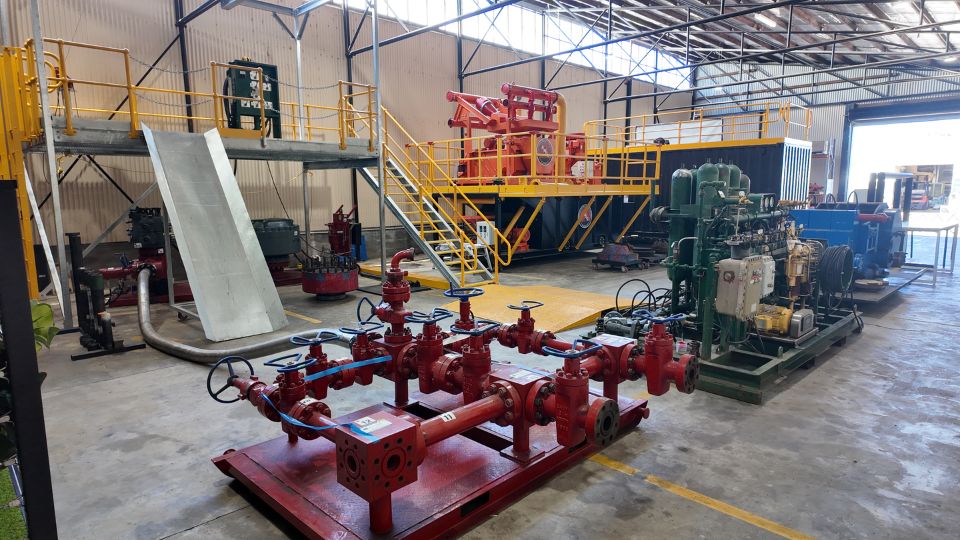
Delivered at AWCC’s purpose-built Toowoomba training facility using real industry equipment, the program immerses students into drilling and well servicing operations through realistic, hands-on learning environments. Participants will gain practical exposure to the roles, responsibilities and operational expectations associated with Certificate III level positions within the industry.

The course has been designed to reflect the realities of the field — not simply the minimum requirements of a training package.

Students will work through practical operational tasks, equipment familiarisation, safety systems, lease operations, communication processes, risk management, permits, isolations and well servicing activities in a structured environment guided by experienced operational personnel.

A key inclusion within the TURBO 3 program is the introduction to well control principles.

This is a critical development area often missing within early workforce pathways. As personnel progress through drilling and well servicing roles, well control becomes increasingly important to operational safety, decision making and career progression. TURBO 3 introduces participants to the foundations of pressure awareness, operational integrity and the importance of well control systems early in their development.

It is about creating the next generation of capable oil and gas personnel before the industry shortage becomes critical.

The reality is many people entering industry do not yet realise how valuable this type of training will become. Companies are no longer simply looking for workers with certificates. They are looking for personnel who can adapt, think operationally and contribute safely from day one.

That is where TURBO 3 changes the game.

This is not just another course.

It is the next evolution of workforce development for the Australian oil and gas industry — designed by industry, built for industry and delivered where real learning happens: on the tools, around the equipment and inside an operational environment.


Continue reading

Strengthening Industry and Community — AWCC & Wild Desert


Opportunities to connect industry, community, and capability don’t come around often — and when they do, they matter.

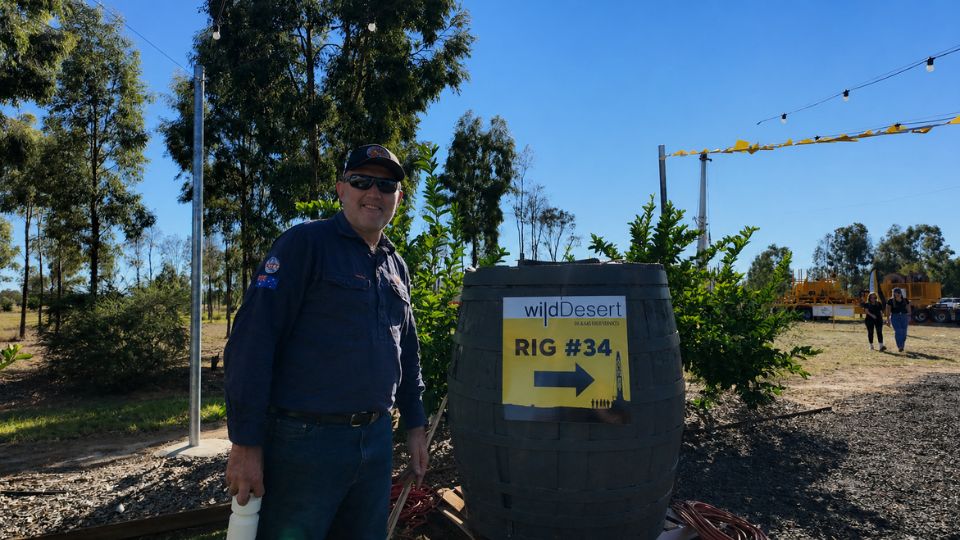
The recent Wild Desert Community Day in Roma, featuring the display of Rig 23, was one of those moments. More than just an event, it was a demonstration of what strong partnerships can achieve when industry opens its doors and brings people into the environment we operate in every day.

For AWCC, being part of this alongside Wild Desert wasn’t just about attendance — it was about alignment.

Our partnership with Wild Desert has been built over many years, grounded in a shared commitment to safety, workforce development, and strengthening the industry from the ground up. Events like this bring that partnership to life in a way that goes beyond training rooms and operational sites.

Rig 23 became the centrepiece — a tangible, powerful representation of the oil and gas sector. For many in the community, it was a rare opportunity to see up close the scale, complexity, and professionalism that defines the work being done in the region.

That visibility matters.

It builds understanding. It creates connection. And importantly, it opens pathways.

Throughout the day, conversations moved beyond curiosity into opportunity — discussions around careers, training pathways, and what it actually takes to work in this industry. For AWCC, this is where we see real value. Not just promoting what we do, but helping people understand how they can be part of it.

This is a key point of difference in how we approach our role in the industry.

We don’t operate in isolation. We work alongside our partners — like Wild Desert — to support not just current operations, but the future workforce. It’s about creating a pipeline of capable, work-ready individuals who understand the expectations and are prepared for the environment they are stepping into.

Wild Desert’s commitment to engaging with the Roma community and showcasing their operations speaks volumes about their leadership in the sector. Opening up access to assets like Rig 23 demonstrates transparency, confidence, and a genuine investment in the regions they operate in.

For AWCC, it reinforces why this partnership works.

We bring training and capability. Wild Desert brings operational excellence and opportunity. Together, it creates a stronger, more connected industry presence — one that supports both business outcomes and community engagement.

Events like the Community Day also highlight the broader impact of the oil and gas sector in regional Australia. Supporting local businesses, engaging with families, and providing insight into career pathways all contribute to building sustainable communities around our operations.

This is more than a single day in Roma.

It’s a reflection of what can be achieved when industry leaders work together with purpose — creating opportunities, building understanding, and strengthening the future of the sector.

AWCC is proud to stand alongside Wild Desert in that mission.

Because strong partnerships don’t just support operations — they shape the industry.


Continue reading

Taroom Trough Momentum Builds — Industry, Infrastructure and Opportunity in Focus


The recent Toowoomba and Surat Basin Enterprise (TSBE) networking event in Miles brought together key voices across the energy sector to discuss one of the most significant emerging developments in Queensland — the Taroom Trough.

What was clear from the outset is that this is no longer a concept. It’s moving.

With regulatory approvals confirmed as of 23 April 2026, the pathway is now opening for exploration, development, and long-term production. The conversation has shifted from if — to how and how fast.

A major focus of the event was the scale of activity already underway across the region. Updates highlighted continued investment from operators, including drilling programs, infrastructure expansion, and long-term planning. Notably, Arrow’s activity includes the drilling of 65 wells by December 2025, alongside significant infrastructure commitments such as two new fuel compressors, a proposed mini power station, 400km of gathering lines, and approximately $9 million in road upgrades.

This level of investment signals more than short-term activity — it reinforces a 20–30 year operational horizon for gas development in the region.

From a workforce and business perspective, this creates a clear message: opportunity is coming, but preparation is critical.

The event strongly emphasised skills, contract readiness, and workforce capability over the next 2–3 years as the basin develops. “Skill security” was a key theme — ensuring the industry has access to a competent, work-ready workforce to support the scale and complexity of upcoming operations.

A highlight of the session was the presence of Gerard Coggan, representing the Office of the Coordinator-General. His focus centred on infrastructure, job creation, and economic development tied to CSG and LNG projects — reinforcing the importance of a coordinated, long-term approach to development.

Equally important was the discussion around shared infrastructure and a unified vision for the basin. Conversations explored what the pathway to market looks like, what facilities will be required, and how operators can collaborate to maximise efficiency. Underpinning all of this was the need to maintain a strong social licence — with coexistence, community engagement, and environmental considerations remaining front of mind.

Adding further depth to the discussion was Trevor Brown, CEO of Omega Oil and Gas, who provided insight into early-stage exploration within the Taroom Trough.

Positioned beneath the Surat Basin, the Taroom Trough represents a deep, unconventional resource requiring high-pressure drilling and advanced techniques. Wells are expected to reach depths of 3,000–4,000 metres before transitioning into horizontal drilling — similar to shale operations seen in the United States.

Importantly, early indications suggest no presence of hydrogen sulphide (H₂S), and geological separation between aquifers and target formations — with significant compressed rock layers in between — reinforcing environmental considerations.

Over the next six to nine months, Omega plans to drill six wells to confirm resource viability. This phase will be critical in shaping the future scale and direction of development.

Operationally, the demand for specialised rigs is already emerging. Discussions indicated that Helmerich & Payne (H&P) are positioning for expansion in the region, with up to four additional rigs potentially entering Australia to meet the technical requirements of deeper, high-pressure drilling programs.

For those in the room, one thing was clear — engagement now matters.

Opportunities to connect with operators, understand upcoming requirements, and position for involvement are already unfolding. Community engagement will also play a key role, with operators planning to involve local stakeholders as projects progress.

The Taroom Trough is not just another project.

It represents the next phase of energy development in Queensland — one that will require alignment across industry, government, and community.

And for those prepared to move early, the opportunity is significant.


Continue reading

Onsite Training That Delivers More Than Compliance — Supporting NACAP Operations Where It Matters Most


In high-risk, high-performance environments, training isn’t something that happens in a classroom and gets left behind at the gate. It has to translate directly to the field — to real decisions, real hazards, and real outcomes. That’s exactly what onsite delivery with NACAP is achieving.

Over recent weeks, our team has been embedded alongside NACAP personnel, delivering targeted training designed around their operational environment — not a generic package. This is where the difference lies.

Too often in our industry, training is treated as a requirement to tick off. Delivered in controlled environments, disconnected from the pressures and realities of site, it can fall short when it matters most. NACAP took a different approach — and so did we.

By bringing training directly to site, we align every element with how their teams actually work. Equipment isn’t theoretical — it’s the equipment they use. Hazards aren’t hypothetical — they’re the ones present in their daily operations. Scenarios aren’t scripted — they are built from real-world conditions.

That changes everything.

It sharpens decision-making. It strengthens team coordination. It builds confidence where it counts — under pressure, in the environment the job demands.

Our trainers are not classroom-based instructors. They are industry operators with firsthand experience in drilling and field operations across Australia. They understand the nuance — the variables that can’t be replicated on a slide deck. That experience allows us to challenge participants at the right level, ask the right questions, and reinforce the standards that keep people safe and operations running.

Working with NACAP, the focus has been clear: capability over compliance.

We’ve delivered training that integrates directly into their workflows, minimises disruption, and adds value beyond the immediate session. Teams are not just completing units — they are strengthening their ability to identify risk, communicate effectively, and respond decisively in real situations.

From a business perspective, the benefits are tangible. Reduced downtime. Improved workforce readiness. Stronger safety culture embedded at the frontline. And importantly, training that holds up under scrutiny — operationally and from a compliance standpoint.

This is where the real point of difference sits.

We don’t arrive with a fixed product and expect the site to adapt. We work with our clients to understand their operations, their pressures, and their expectations — then deliver training that fits. It’s a partnership approach, not a transaction.

For NACAP, that has meant a training solution that supports their teams where they need it most — on the ground, in real time, with real impact.

Because at the end of the day, training isn’t about what happens in the session. It’s about what happens after it.

And that’s where the right approach makes all the difference.


Continue reading

AWCC Expands to Adelaide


Face-to-Face IWCF Training Arriving Soon

Access to high-quality Well Control training has long been a challenge for many operators and crews working across South Australia and surrounding regions. Travel, time away from site, and limited local options have often made maintaining competency more difficult than it should be.

That’s about to change.

AWCC is preparing to open a dedicated IWCF training centre in Adelaide — bringing face-to-face Well Control training directly to the region and providing industry with a new level of access, flexibility, and capability.

This isn’t just an expansion. It’s a response to what industry has been asking for.

For too long, many have had to rely on remote delivery or travel interstate to complete critical IWCF certification. While these options meet minimum requirements, they don’t always deliver the depth of engagement and practical understanding that face-to-face training provides.

And in Well Control, that difference matters.

Our Adelaide facility will deliver IWCF Level 3 and Level 4 programs in a fully immersive, face-to-face environment. Participants will have direct access to experienced trainers, real-time scenario engagement, and hands-on interaction with simulation technology — all designed to reinforce decision-making under pressure.

Because Well Control isn’t just about knowing the process.

It’s about recognising the signs early, responding correctly, and managing situations where the consequences of error are significant.

Face-to-face delivery allows for a level of interaction that cannot be replicated remotely. It enables deeper discussion, immediate feedback, and the ability to challenge thinking in real time. Participants can engage directly with instructors who have operated in Australian conditions — bringing context and experience that goes beyond theory.

That’s where the real value sits.

The Adelaide centre will also support the broader industry push for continuous improvement and operational excellence. By making high-quality training more accessible, it reduces barriers to maintaining competency and strengthens workforce capability across the region.

For organisations, this means less downtime, reduced travel costs, and greater flexibility in scheduling training. For individuals, it means the opportunity to develop and validate their skills in an environment that mirrors the expectations of the field.

As with all AWCC delivery, the focus will remain on capability over compliance.

We don’t approach Well Control as a tick-box exercise. Our programs are built to challenge participants, reinforce critical thinking, and ensure that knowledge can be applied when it matters most.

The opening of the Adelaide IWCF training centre marks the next step in that commitment.

It’s about bringing industry-leading training closer to where it’s needed. Supporting operators with practical, relevant development. And ensuring that those responsible for Well Control are equipped with the skills and confidence to perform at the highest level.

Adelaide is next.


Continue reading

Hands-On BOP Training — Real Equipment, Real Understanding


In Well Control, understanding the Blowout Preventer (BOP) isn’t optional — it’s critical.

Yet too often, learning about BOP systems is confined to diagrams, slides, and theory. While that builds foundational knowledge, it doesn’t always translate to confidence when standing in front of the equipment itself.

That’s where AWCC’s 2-day Hands-On BOP Course makes the difference.

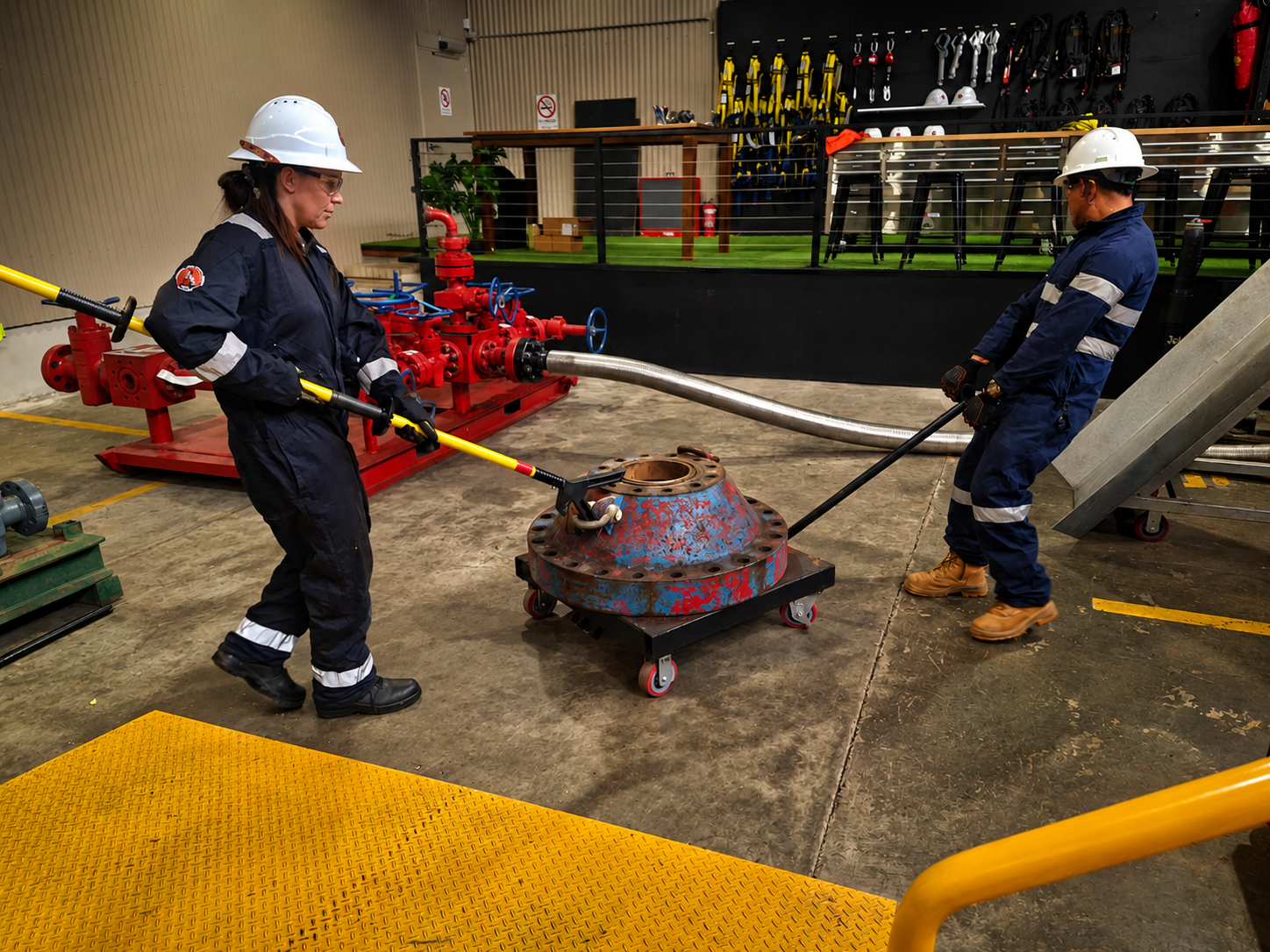
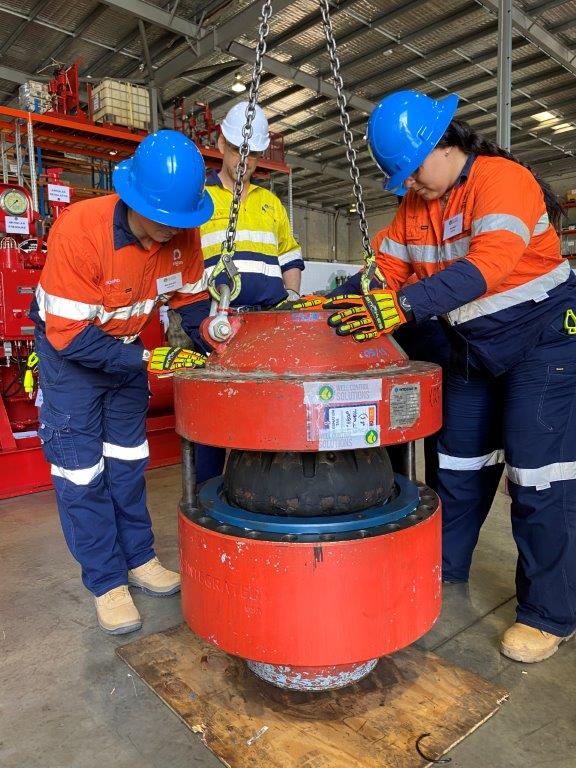
Delivered at our purpose-built training centre, this course is exactly what it sounds like — practical, immersive, and focused entirely on working directly with BOP equipment. No shortcuts. No assumptions. Just real interaction with the systems that play a critical role in well control and safety.

Participants don’t just learn what a BOP does — they work with it.

From identifying components and understanding system layouts through to function testing, operation, and troubleshooting, the course is built to develop practical competence. It bridges the gap between theory and application, ensuring participants leave with a clear, working understanding of how these systems perform in real conditions.

This is particularly valuable for roles such as motormen, where hands-on familiarity with equipment is essential. The course provides an opportunity to build confidence, refine skills, and deepen understanding of the systems they work with or around on a daily basis.

At the same time, it offers strong value for engineers.

For those coming from a design or technical background, the ability to physically engage with BOP equipment provides insight that can’t be gained from documentation alone. It brings context to design considerations, operational limitations, and maintenance requirements — strengthening the connection between engineering and field application.

That crossover is where real capability is built.

What sets this course apart is the environment it’s delivered in.

Our training centre houses fully functional equipment, allowing participants to experience how systems operate as an integrated unit. This isn’t a demonstration — it’s participation. Every element is designed to ensure that learning is active, relevant, and immediately transferable to the field.

Over the two days, participants are challenged to think, engage, and apply their knowledge in a controlled but realistic setting. Questions are encouraged. Scenarios are explored. And most importantly, understanding is reinforced through doing — not just observing.

Because when it comes to critical equipment like a BOP, familiarity matters.

From a safety perspective, the value is clear. A workforce that understands the equipment at a practical level is better prepared to operate it correctly, identify issues early, and respond effectively when required.

From an operational perspective, it builds efficiency, reduces uncertainty, and strengthens overall performance.

This is not a course designed to tick a box.

It’s designed to build real understanding of one of the most important systems in the industry.

And for those looking to step up their capability — whether on the tools or in the design space — it’s exactly where that next level starts.


Continue reading

Honouring Service Beyond the Field — AWCC Supports Veterans Rugby on ANZAC Day


ANZAC Day is a time for reflection, respect, and recognition of those who have served — past and present. It’s a day that carries deep meaning across Australia, and for many, that connection extends far beyond a single moment of silence.

At AWCC, that respect isn’t confined to one day.

We are proud sponsors of the Spartan Veterans Rugby Club, supporting not only the players but also the broader veterans community — including those who continue to serve the game as match officials. It’s about giving back in a way that aligns with our values, our people, and our connection to service.

This year’s ANZAC Day Veterans Cup in Toowoomba was a powerful example of that commitment in action.

The match between Spartans Veterans Rugby Club and Toowoomba City Bears was more than just a game. It was a gathering of mateship, shared history, and continued purpose — played in the spirit that defines both rugby and military service.

In a tightly contested match, Spartans came away with a hard-fought 7–5 victory over the Bears. But the result, while important, wasn’t the focus.

The real significance was in what the day represented.

Veterans stepping back onto the field. Community coming together in support. And the continuation of camaraderie that extends well beyond time in service.

Adding to the occasion, AWCC’s Manager — and a veteran — took to the field as a match official for the game. It’s a reflection of what we stand for: not just supporting from the sidelines, but being actively involved, contributing, and giving back through action.

This is where our commitment sets us apart.

Supporting veterans isn’t a campaign or a gesture — it’s part of who we are. Many within our organisation come from military backgrounds, bringing with them the discipline, leadership, and values that shape how we operate every day.

Backing initiatives like the Spartans Veterans Rugby Club is a natural extension of that.

It’s about recognising the importance of connection, purpose, and opportunity beyond service. It’s about supporting environments where veterans can continue to challenge themselves, stay connected, and be part of something bigger.

Events like the ANZAC Day Veterans Cup reinforce that these values are alive and well — not just remembered, but lived.

For AWCC, it’s an honour to stand alongside those who have served, and to support initiatives that make a real difference within the veteran community.

Because giving back isn’t something we do once a year.

It’s something we carry with us — every day.


Continue reading

Frontline Leadership — Industry Asked, We Delivered


Strong leadership at the frontline has never been more critical in the oil and gas sector. As operations grow more complex and the expectations around safety, accountability, and performance continue to rise, the need for capable, confident leaders on the ground is clear.

The message from industry has been consistent: we need practical, relevant leadership development — not theory, not generic management content, but something built for the realities of our environment.

That’s exactly what the Safer Together Frontline Leadership Program delivers.

Developed in response to industry demand and aligned with the Safer Together initiative, this program is designed specifically for those stepping into leadership roles, or those already leading teams and looking to strengthen their impact. It recognises that frontline leaders are the critical link between systems and execution — where culture is set, standards are upheld, and decisions are made in real time.

This isn’t a course that sits in the abstract.

It focuses on the behaviours, communication, and decision-making required on site. How to lead conversations that matter. How to identify and manage risk before it escalates. How to influence team behaviour and create an environment where people speak up, take ownership, and work together to get the job done safely.

What sets this program apart is its direct connection to industry expectations.

The content reflects the challenges leaders are facing today — managing diverse teams, balancing operational pressures with safety obligations, and maintaining standards in dynamic environments. It reinforces the principles that underpin Safer Together, while providing practical tools that can be applied immediately.

Participants aren’t just learning what leadership looks like — they are developing how to lead.

From setting clear expectations to managing performance, from effective communication to situational awareness, the program builds capability where it counts. It gives emerging leaders the confidence to step into their role with clarity and purpose, and experienced leaders the opportunity to refine and strengthen their approach.

For businesses, the impact is significant.

Stronger frontline leadership leads to better decision-making, improved team performance, and a more consistent safety culture across operations. It reduces risk, enhances communication, and ensures that standards are not just documented — they are lived.

At AWCC, our role is to deliver this program in a way that resonates with industry.

Our facilitators bring real operational experience, allowing them to connect the content directly to the environments participants work in. It’s not about delivering slides — it’s about challenging thinking, sharing insight, and building leaders who can operate effectively in the field.

The introduction of the Safer Together Frontline Leadership Program marks an important step forward.

Industry identified the gap. The need was clear. Now, the solution is here.

For anyone stepping into a leadership role, or for organisations looking to strengthen capability at the frontline, this program is not just relevant — it’s essential.

Because strong operations start with strong leaders.


Continue reading

Flange Management — Precision, Pressure, and Practical Control


When working with pipework, there’s no room for assumption.

Flange connections sit at the centre of some of the most critical systems in oil and gas, construction, and industrial operations. Whether it’s during installation, maintenance, or complex P&I (piping and instrumentation) work, the integrity of a flange can be the difference between safe operations and serious incident.

That’s why flange management isn’t just a task — it’s a discipline.

At AWCC, our Flange Management Course is built around that understanding. Designed for those working directly with pipework systems, maintenance teams, and personnel involved in high-pressure environments, this course focuses on developing the precision, control, and confidence required to get it right every time.

Because in this space, “close enough” isn’t good enough.

The course is delivered as a hands-on, practical program at our purpose-built training facility. Participants work directly with flange assemblies, tools, and equipment in a controlled environment that replicates the conditions they will encounter in the field.

From correct assembly techniques and bolt tensioning through to gasket selection and alignment, every element is covered with a focus on application — not just theory.

A key feature of the course is the inclusion of working under a pressure vessel scenario.

This provides a controlled but realistic environment where participants can understand the risks associated with pressurised systems, the importance of correct procedures, and the consequences of failure. It reinforces the need for discipline in execution and attention to detail at every stage of the process.

For those involved in maintenance activities, this training is particularly valuable.

Flange integrity is often tested during shutdowns, repairs, and system modifications — environments where time pressure can increase risk. Having the right skills and understanding ensures that work is completed safely, efficiently, and to the required standard.

For personnel engaged in P&I work, the course strengthens the connection between design intent and field execution. It builds an understanding of how systems come together, how loads are distributed, and how incorrect practices can lead to leaks, failures, or ongoing operational issues.

This is where real capability is developed.

Our trainers bring industry experience into the environment, ensuring that the training reflects the challenges faced on site. Participants are encouraged to engage, ask questions, and work through practical scenarios that build both skill and confidence.

The result is a workforce that understands not just how to assemble a flange, but why each step matters.

From a compliance perspective, flange management is a critical component of safe operations. But beyond compliance, it’s about protecting people, equipment, and the integrity of the system.

At AWCC, we don’t approach this as a tick-box exercise.

We approach it as a critical skill set — one that underpins safe, efficient, and reliable operations across the industry.

Because when you’re working with pipework and pressure, there is no margin for error.

And the right training makes all the difference.


Continue reading

Connecting Communities, Strengthening Industry — TSBE Indigenous Engagement in Miles


Not every event is about immediate outcomes. Some are about presence, perspective, and building the kind of relationships that shape the future of our industry.

The recent TSBE Indigenous engagement event in Miles was exactly that.

Bringing together local community members, Indigenous representatives, and industry leaders, the event created a space for open conversation — not just about projects or opportunities, but about connection, understanding, and shared direction.

For AWCC, being part of this wasn’t about promoting services or driving immediate business outcomes. It was about showing up, listening, and engaging with the people and communities that are fundamental to the success of our industry.

Because in regions like Miles and across the Surat Basin, industry doesn’t operate in isolation.

It exists alongside communities — and strong, respectful relationships are critical. The future of energy, infrastructure, and regional development depends on collaboration that goes beyond contracts. It requires trust, engagement, and a genuine commitment to working together.

The event highlighted the importance of Indigenous participation and inclusion within the sector. Not just as a conversation point, but as a practical focus — creating pathways into employment, training, and long-term careers.

There was a clear alignment in the room.

Industry leaders, local stakeholders, and community representatives all recognising the value of working together to build sustainable outcomes. Shared challenges were acknowledged, but more importantly, so were shared opportunities.

That’s where events like this matter most.

They create an environment where conversations happen without agenda. Where connections are made that don’t necessarily show immediate return, but build the foundation for future collaboration.

For AWCC, this aligns directly with how we see our role in the industry.

We are not just a training provider — we are part of a broader ecosystem that supports workforce development, community engagement, and industry growth. Engaging with Indigenous communities is a critical part of that, ensuring that opportunities are accessible, relevant, and meaningful.

Spending time in Miles, alongside like-minded organisations and individuals, reinforced a simple but important point — the strength of our industry is tied to the strength of our relationships.

When we invest time in understanding each other, when we listen, and when we engage with intent, we create better outcomes for everyone involved.

This wasn’t about a single initiative or announcement.

It was about being present in the conversation, supporting local communities, and standing alongside industry partners who share the same commitment to progress.

And while the outcomes may not always be immediate, the impact is lasting.

Because the future of our industry won’t just be built on projects and production — it will be built on the relationships we create along the way.


Continue reading