Managing Heat Stress: Protecting Workers This Summer


As Queensland heads into another summer, the message is clear: working in extreme heat isn’t just uncomfortable, it’s dangerous.

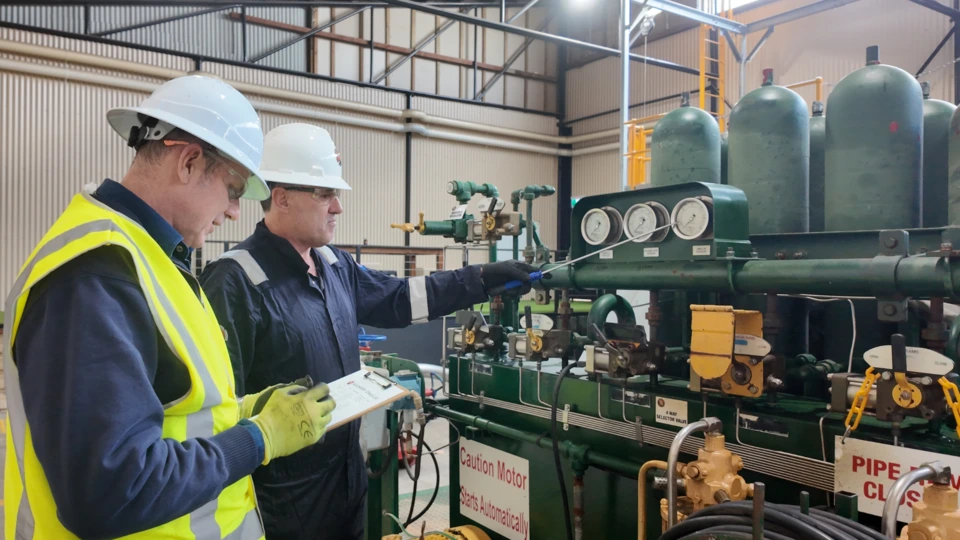
Heat exposure continues to be one of the most underestimated workplace risks in the oil and gas, mining, and construction industries, and every year, preventable incidents occur. Whether you’re on a rig, in a workshop, or operating machinery outdoors, managing heat is critical for worker safety and wellbeing.

Understanding the Risk 

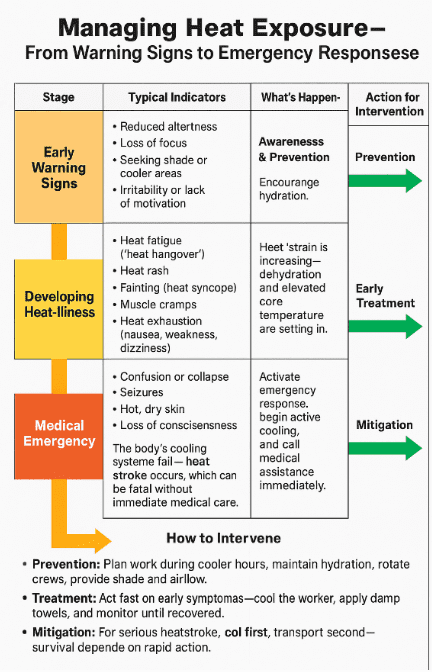
When the body is exposed to extreme temperatures or humidity, it struggles to cool itself. Once that balance is lost, heat stress sets in. It doesn’t take long for mild symptoms  like fatigue, muscle cramps, nausea or dizziness to turn into something much more serious. 

If left untreated, heat stress can quickly progress to heat stroke, which is a medical emergency that can lead to confusion, collapse, or even death. 

Factors such as air movement, clothing, workload, fitness, hydration, and even medication can all influence how a worker responds to heat. This isn’t about toughness – it’s about physiology. 

“Heat doesn’t care how tough you are. Once your body overheats, there’s no pushing through it.” 

That’s a mindset shift our industry must continue to embrace. Prevention is the only safe option. 

Hydration and Healthy Work Habits 

Hydration is the first and most effective control measure, but it’s not just about drinking water when you feel thirsty. 

Workers should sip small amounts of cool water every 15–20 minutes, not gulp large amounts occasionally. Drinks high in caffeine or sugar like coffee, cola, and energy drinks can dehydrate you faster. Including ice in your water and maintaining a balanced diet before and during shifts also helps stabilise electrolytes and core body temperature. 

A quick personal check is simple: if your urine is dark yellow, you’re dehydrated. Aim for pale yellow. 

For anyone returning to work after time off, or coming from cooler climates, take time to acclimatise. Your body needs to gradually adjust to the heat, especially on physically demanding sites. 

Planning and Prevention on Site

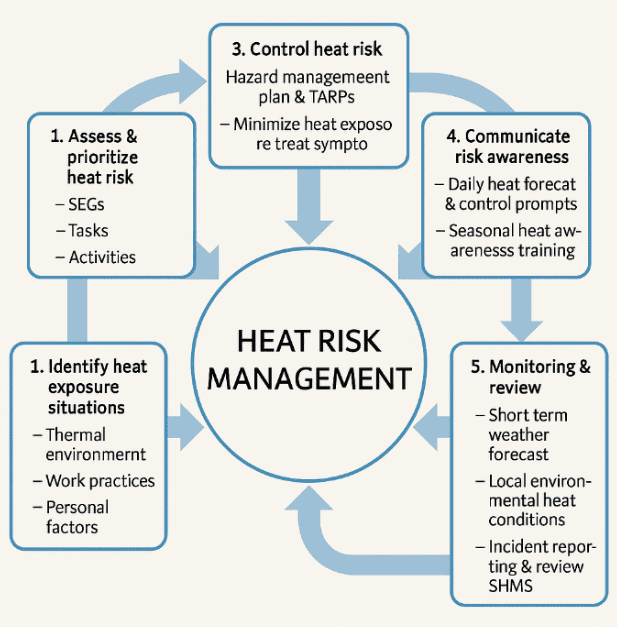
Every workplace should have a Heat Management Plan that is actively implemented:

  • Schedule heavy work during cooler parts of the day

  • Rotate crews through shaded or air-conditioned rest areas

  • Provide easy access to cool, potable water

  • Ensure PPE is light, breathable, and task-appropriate

  • Encourage workers to recognise early heat stress symptoms in themselves and colleagues
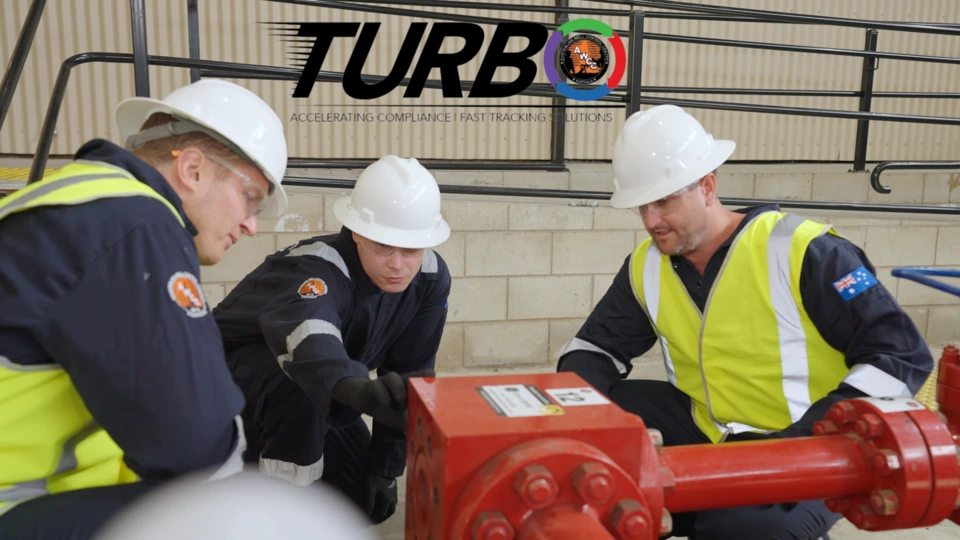
AWCC training emphasises planning shift rotations and adjusting workloads during extreme temperatures. Leadership is key to fostering a culture where speaking up about heat is expected and supported.

Responding Quickly to Heat Emergencies

If someone starts showing signs of heat stress, act immediately, don’t wait. 
Move them to shade or an air-conditioned area, loosen PPE, apply cool wet towels, and provide water if they’re alert enough to drink. Always call for first aid support, heat stroke is a medical emergency.  

Every site should have a portable heat emergency kit, including an esky with ice, bottled water, damp towels, and instant cold packs. These small steps can make all the difference while waiting for emergency response teams. 

“Those first few minutes matter. Cooling a person quickly can be the difference between recovery and tragedy.” 
Legal Obligations for Heat Safety in Queensland

Queensland safety laws require site managers and employers to ensure workers are not exposed to unsafe heat risks. Key references include:

  • Guidance Note QGN32 – Managing Exposure to Heat

  • Petroleum and Gas (Safety) Regulation 2018

  • WorkSafe Queensland – Managing the Risk of Working in Heat

Following these guidelines ensures compliance and protects workers’ health and safety.

The Takeaway: Look After Each Other 

Heat stress isn’t a test of endurance — it’s a test of awareness. 
It’s not just about finishing the job; it’s about getting everyone home safely. 

Every bottle of water, every shaded break, every “you okay, mate?” makes a difference. 

As we move into the hotter months, let’s plan ahead, stay hydrated, and support each other on-site. 
Because at AWCC, we know that safety isn’t just a policy — it’s personal. 

Further Information 

  • RSHQ Safety Alert 461 – Effective Management of Heat Risks for Workers (October 2025) 
  • Safe Work Australia – Managing the Risk of Working in Heat 
  • WorkSafe Queensland – Heat Stress Calculator 
  • AIOH – Managing Heat Stress in the Australian Environment 
Continue reading

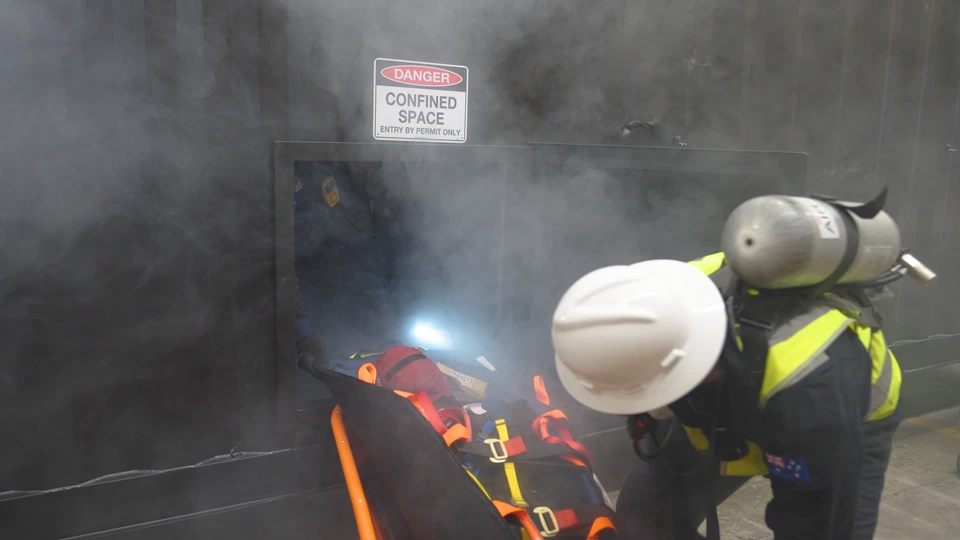
Why Preparedness Saves Lives – Confined Space Rescue 


Across Australia, confined spaces are part of everyday work. They take many forms—tanks, pits, wells, sewers, silos, tunnels, process vessels and are essential in industries such as oil and gas, mining, construction, agriculture, and water utilities. But while they are routine, they are also some of the most dangerous environments a worker can face. 

The hazards of confined spaces are often invisible. A single breath in an oxygen-deficient atmosphere can incapacitate. A sudden release of gas can overwhelm or ignite. Loose material can engulf without warning. Add restricted access and complex geometry, and what might be a minor incident in open air quickly becomes life-threatening underground or inside a vessel.

The Hidden Danger: Why Rescuers Are Most at Risk

Confined space emergencies escalate fast—and often claim the lives of those trying to help.
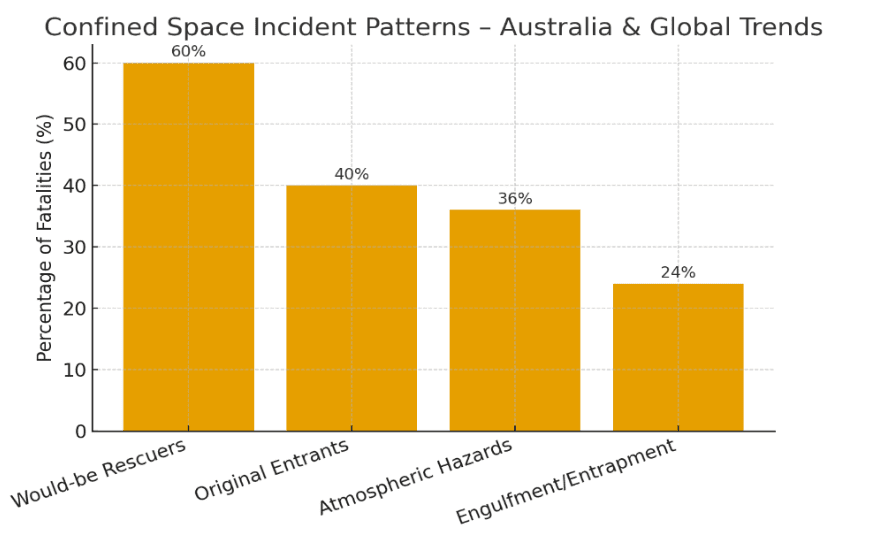
According to Safe Work Australia, around 60% of confined-space fatalities involve would-be rescuers. These are co-workers who act on instinct, rushing in without the right training or equipment, only to be overcome themselves. In moments, one emergency becomes two—or worse.

Legal and Safety Requirements for Confined Space Entry

Australian law makes the importance of confined space rescue training clear.
The Work Health and Safety Regulation 2011 (Part 4.3) requires PCBUs to:

  • Identify confined spaces

  • Assess and control risks

  • Implement permit systems

  • Isolate hazards

  • Maintain documented and rehearsed rescue procedures

The Model Code of Practice: Confined Spaces (2024) also states that relying only on external emergency services is not acceptable—rescue must be possible on site.
The Australian Standard AS 2865:2009 provides the technical foundation, outlining the need for trained observers, rescue equipment, and competency.

Together, these requirements make one thing clear: no confined-space entry is safe without trained personnel and a practiced rescue plan.

From Compliance to Capability: Building Real Rescue Readiness

Preparedness goes beyond ticking boxes.
An effective rescue system must be realistic, practical, and proven through rehearsal. Workers should be able to:

  • Monitor and test atmospheres

  • Use breathing apparatus (SCBA) confidently

  • Package and retrieve casualties safely

  • Coordinate under pressure

  • Operate essential rescue equipment like tripods, winches, gas detectors, and ventilation systems

Plans on paper don’t save lives — competence and practice do.

Learning from Tragedy

Many incidents share the same heartbreaking pattern:
A worker collapses due to oxygen deficiency. A colleague enters, unprotected, to help—and within seconds, both are lost.

These tragedies are 100% preventable with proper training, equipment, and planning.
Training transforms instinctive, dangerous responses into structured, effective action that saves lives.

AWCC – Delivering Confined Space Rescue Training That Saves Lives

At the Australian Well Control Centre (AWCC), we believe confined space rescue training is more than a regulatory requirement—it’s a moral responsibility.
As a Registered Training Organisation (RTO 41356), AWCC helps industry turn compliance into capability.

Our programs feature:

  • Realistic rescue simulations and purpose-built training rigs

  • Alignment with WHS law and AS 2865

  • Skilled trainers with real industry experience

We ensure every participant leaves with both confidence and competence—ready to act safely and effectively in a confined space emergency.

Be Ready, Be Trained

Confined space rescue is about more than safety—it’s about protecting lives, sustaining industries, and preventing tragedies before they occur.

Because when every second matters, it isn’t instinct that saves lives.
It’s preparation, training, and practice.

Learn more about our nationally recognised Confined Space Rescue Course here.


Continue reading

Building Skills for Australia’s Onshore Gas Future


Australia’s onshore oil and gas industry is entering a defining decade. From Queensland’s coal seam gas (CSG) fields to the Northern Territory’s Beetaloo Basin and the Cooper Basin’s pioneering carbon capture and storage (CCS) projects, billions of dollars in investment and thousands of new jobs are on the horizon.

But the success of these developments won’t be measured by drilling rigs alone, it will depend on workforce readiness, safety, compliance, and community trust.

At the Australian Well Control Centre (AWCC), our mission is clear: to prepare Australia’s energy workforce with the skills, qualifications, and safety mindset needed to lead the industry forward. We build not only technical capability but also the responsibility to work safely, respectfully, and sustainably.

Onshore Projects Driving Workforce Demand 

Across Australia, major onshore gas projects are creating long-term employment opportunities:

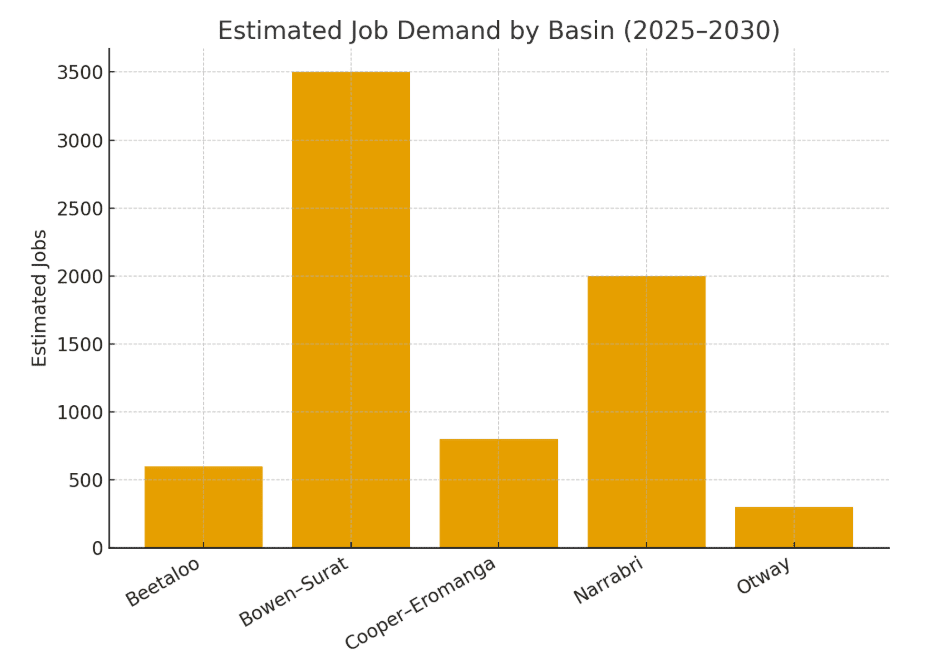
  • Beetaloo Basin (NT): The Sturt Plateau Pipeline is under construction and expected to deliver first gas by mid-2026, creating hundreds of construction and drilling jobs. Its success depends on effective heritage and groundwater management.

  • Bowen–Surat Basin (QLD): Expansion through Arrow Energy’s Phase 2 and Senex Atlas projects will deliver hundreds of new wells by 2028 — increasing demand for drillers, field operators, pipeline welders, and safety officers.

  • Cooper–Eromanga Basin (SA/QLD): The Moomba CCS project began CO₂ injection in 2024 and can store up to 1.7 million tonnes annually — driving new roles in monitoring, instrumentation, and compliance.

  • Narrabri Gas Project (NSW): Pending approval, this development could see over 850 wells and thousands of jobs over two decades, emphasising the need for environmental and heritage compliance training.

  • Otway Basin (VIC/SA): Facility and pipeline upgrades continue to create seasonal workforce demand, particularly for maintenance and logistics personnel.

Skills That Employers Now Demand

The onshore gas market is shifting. Contractors are no longer hiring for a single trade — they want multi-skilled, compliant professionals.

That means drillers trained in fatigue management, welders certified in confined space safety, and supervisors who understand environmental and WHS compliance.

This shift places new emphasis on industry-accredited training and nationally recognised qualifications that prepare workers for both technical and regulatory demands.

The Bigger Picture: Opportunity With Responsibility

According to the AEMO 2025 Gas Statement of Opportunities, Australia’s east coast may face gas supply shortfalls from 2028 unless new onshore projects progress. The Federal Government’s Future Gas Strategy confirms that gas will remain critical to the nation’s energy mix — but under stricter climate and sustainability frameworks.

For the workforce, this means that compliance, safety, and environmental awareness are not optional extras, they are central to project success.

The Road Ahead: Preparing for 2030 and Beyond

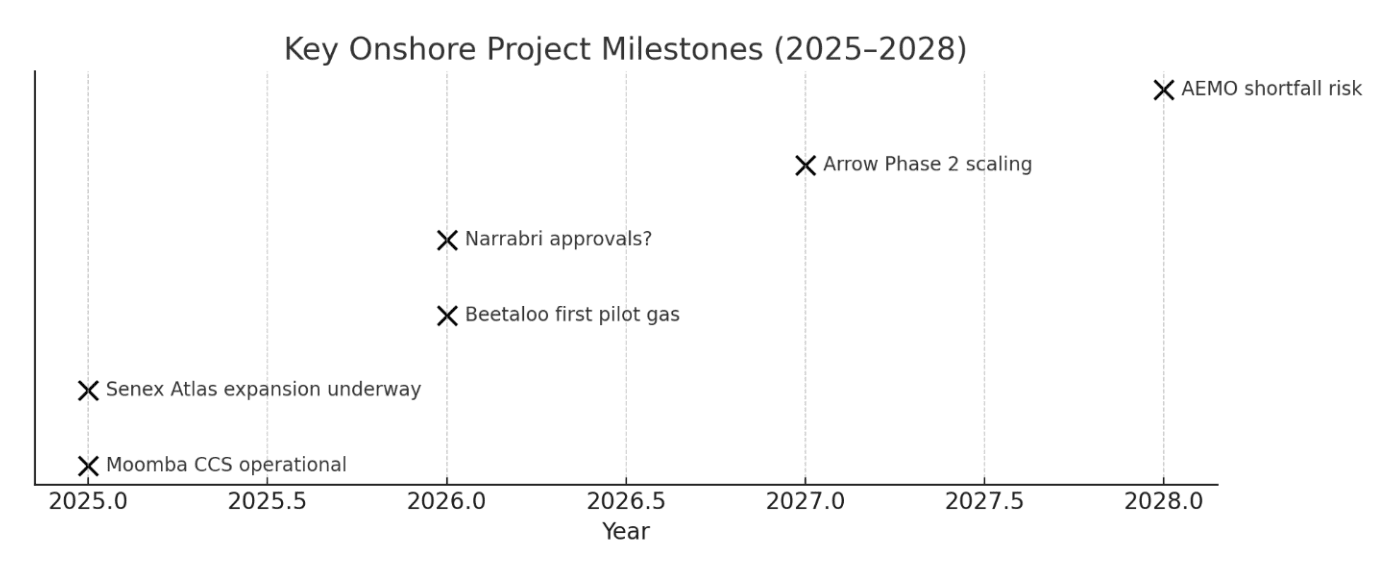
By 2026, Beetaloo Basin will deliver its first pilot gas. By 2027–2028, Arrow Energy’s Phase 2 will be driving drilling and compression activity. By 2030, carbon capture and storage will be mainstream, with Moomba operating at full capacity and new CCS initiatives underway in Queensland and the NT.

The future oil and gas workforce will be diverse and adaptable,  combining technical, environmental, and compliance expertise.

AWCC’s Commitment to Workforce Readiness

At AWCC, our role is not to advocate for specific projects, it’s to ensure that when projects proceed, the workforce is ready.

As a Registered Training Organisation (RTO 41356) in Brisbane and Toowoomba, we provide industry-built safety and compliance training for the oil and gas, mining, and construction sectors. Our programs align with Australian WHS legislation, industry standards, and real-world site conditions.

From Well Control Training to Safety Courses, our courses build confidence, competence, and compliance — the essential ingredients for a safer, stronger industry.

Australia’s onshore gas future depends not only on the reserves below ground but on the capability and safety of the people above it.

At the Australian Well Control Centre, we’re proud to lead that preparation, building a workforce that is skilled, compliant, and ready to deliver Australia’s energy future safely and responsibly.

Gary King 
Manager, Australian Well Control Centre 


Continue reading

Powering the Future: Why a Career in Australia’s Oil and Gas Sector Matters


Australia sits on vast energy resources that power our homes, industries, and export economy. Oil and gas remain central to this picture as the nation transitions towards lower emissions and new fuels. That transition depends on one crucial factor — people. Skilled, safety-conscious, and job-ready workers trained through the Australian Well Control Centre (AWCC) are key to keeping the industry moving forward.

Careers With Staying Power 

Oil and gas projects in Australia span decades, creating long-term demand for skilled professionals across operations, maintenance, logistics, drilling, and safety roles.
While renewable energy continues to grow, natural gas remains a critical transition fuel both domestically and internationally. With LNG exports to Asia and ongoing local production, there will be continuous demand for trained personnel.

For those entering the industry, this stability means more than just employment — it means a career with staying power and security. Through AWCC-accredited training programs, participants gain recognised qualifications that open pathways to lasting employment in oil and gas.

Skills That Build a Future 

A career in oil and gas builds transferable, high-value skills. From well control and safety management to teamwork, problem-solving, and technical knowledge, these abilities are valued across sectors — including mining, construction, and renewables.

That’s why training and certification are so important.
At the Australian Well Control Centre, our courses are designed with industry input to ensure participants are job-ready for real site conditions. Whether you’re a new entrant or an experienced worker refreshing your qualifications, AWCC’s oil and gas training equips you to perform safely and effectively.

Financial Reward and Lifestyle

Few industries offer the same combination of reward and flexibility as oil and gas. Even entry-level roles often earn above the national average, and FIFO rosters can provide extended time off between swings. For school leavers, it’s a pathway to early financial independence. For skilled workers, it’s a way to leverage experience into higher-paying, respected roles.

By connecting safety training and well control certification directly to employment pipelines, AWCC helps make these opportunities accessible — supporting individuals from the classroom to site-ready positions.

An Industry Shaping the Future 

The oil and gas sector is evolving rapidly. Automation, robotics, digital monitoring, and carbon capture and storage (CCS) are becoming standard, while investment grows in hydrogen and cleaner energy production. Workers who train today will be part of the energy transition workforce of tomorrow.

AWCC’s oil and gas courses are evolving too. We integrate simulation technology, digital safety systems, and compliance frameworks into every program — ensuring graduates don’t just meet today’s requirements but are prepared for the future of Australian energy.

A Career With Purpose 

Beyond technology and pay, oil and gas careers are about impact. This industry keeps hospitals running, fuels transport networks, and powers everyday life. It’s meaningful work that supports the nation’s infrastructure and economy.

At the Australian Well Control Centre, we take pride in training the workforce behind this vital sector — building capability, safety awareness, and leadership to keep the industry strong, sustainable, and safe.

The Optimist’s Choice 

Challenges exist, from climate change to regulation, but that’s why the industry needs people who see solutions and innovation. For school leavers, it’s a chance to start strong; for skilled workers, it’s a chance to advance.

Oil and gas offers stability, growth, financial reward, and purpose — and with AWCC’s nationally accredited training, anyone with drive can build a meaningful, future-proof career.

Conclusion 

Australia’s energy future depends on people — skilled, safe, and ready to lead. For those ready to take the next step, the oil and gas industry offers more than jobs — it offers a rewarding career that grows with you.

The Australian Well Control Centre (AWCC) is proud to support that journey through nationally recognised oil and gas training, safety courses, and well control programs.

If you’re ready to take charge of your future, start your training with AWCC today — where safety, skill, and opportunity meet.


Continue reading

October is Breast Cancer Awareness Month


Each October, the National Breast Cancer Foundation (NBCF) shines a light on an issue that touches so many lives across Australia — breast cancer. It’s the second most commonly diagnosed cancer in the country, with an average of nine Australians losing their lives every single day to the disease.

At the Australian Well Control Centre (AWCC), we’re proud to support Breast Cancer Awareness Month and stand alongside those whose lives have been affected. This month is about more than wearing pink, it’s about raising awareness, supporting research, and contributing to a future where no one dies from breast cancer.

The NBCF’s goal of Zero Deaths from Breast Cancer can only be achieved through ongoing research and innovation, understanding how the disease starts, grows, and spreads so it can be stopped in its tracks. Every donation, conversation, and show of support helps drive that mission forward.

We encourage our team, students, and community to take a moment this month to learn more, show support, and get involved, whether it’s through a donation, wearing pink in the workplace, or starting a conversation that raises awareness.

Together, we can help make a difference and move closer to a future free from breast cancer.

🔗 Learn more or donate: www.nbcf.org.au


Continue reading

Message from the Management Team


Welcome to AWCC’s first industry newsletter. September wasn’t just another month for us — it was a showcase of innovation, recognition, and momentum that proves why AWCC continues to lead the way in workforce training. 

Our mission is simple but powerful: to deliver training that is designed by industry, for industry — practical, compliant, and always aligned to workforce needs. What defines us is not only what we deliver today, but how we continually evolve to meet the challenges of tomorrow. 

Recognition & Milestones 

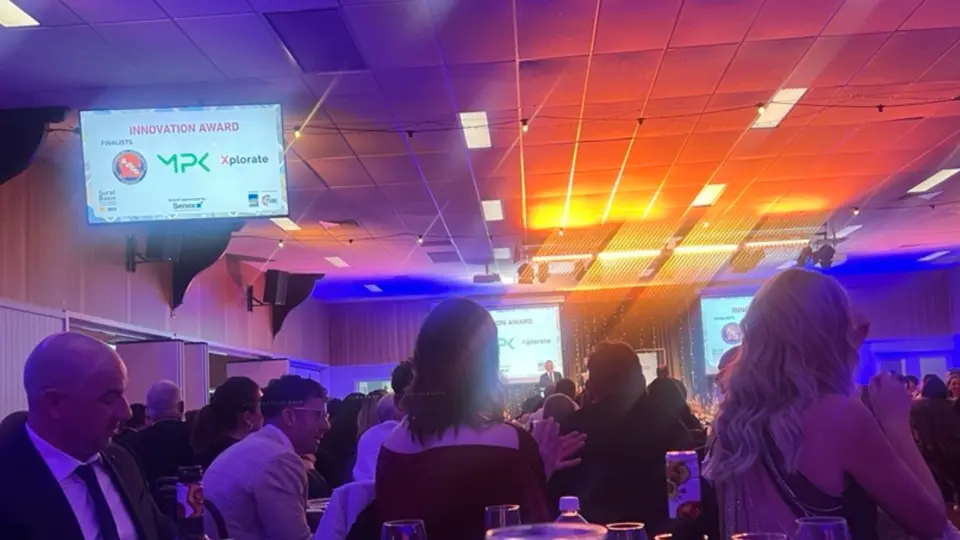
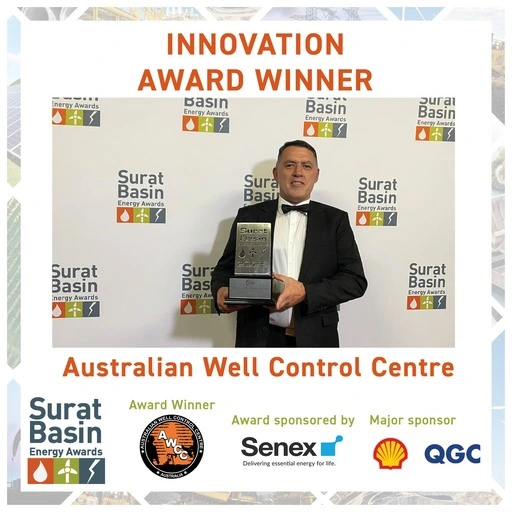
We were proud to win the Innovation Award for the Turbo Program at the Surat Basin Energy Awards. Turbo has redefined how the industry prepares its workforce, producing compliant, work-ready graduates in just seven days. For the oil and gas community, this means faster access to skilled personnel; for the public, it means safer, more sustainable operations that strengthen the long-term resilience of the sector. 

We’re also honoured to be finalists in two categories — Professional Services and Innovation — at the Business Excellence Awards. This nomination reinforces the trust placed in us to deliver quality outcomes that benefit both industry and the communities it supports.

This month, AWCC engaged across a range of industry and community events, from safety forums to innovation expos. These weren’t just networking opportunities — they were platforms where we shared our expertise and listened to industry challenges, ensuring our training remains responsive to real-world needs. 

Building Capability 

September also marked internal growth: welcoming a new trainer in our Brisbane office, launching Forklift training courses, and strengthening our resources and delivery systems. Each step increases our capacity to support both industry and community by creating more pathways into work and ensuring training is grounded in compliance and safety. 

Why AWCC Leads 

What sets AWCC apart is the rigor behind our delivery. Every program is built on four foundations: 

  • SMEs with decades of real-world knowledge. 
  • Continuous Improvement to integrate new technology, feedback, and regulations. 
  • QA Systems to guarantee consistency and compliance. 
  • Innovation through VR/AR/MR simulators and digital platforms that bring learning to life. 

This approach ensures we’re not just delivering training — we’re solving industry problems by reducing skill shortages, improving safety, and strengthening community confidence. 

Looking Ahead – Building for Tomorrow 

While September brought recognition, the real story is what’s ahead. AWCC is actively investing in projects that address industry challenges while delivering broader benefits: 

  • Well Intervention Programs – supporting advanced operations, ensuring safe, competent crews for complex tasks. 
  • Turbo Cert III – the next evolution of Turbo, offering deeper skills to create job-ready graduates who can contribute immediately on site. 
  • Sub-Sea IWCF Simulators – tackling the challenge of offshore readiness with world-class simulation, reducing risk while boosting competence. 
  • Plant & Equipment Training (Scissor Lift, under-11m Boom EWP) – meeting demand for practical tickets that improve employability and site safety. 
  • Heights Rescue – addressing critical emergency response needs and ensuring work at height is managed with the highest safety standards. 
  • IWCF Online Resources – making world-class well control learning accessible globally, helping companies upskill teams faster and more efficiently. 
  • Continuous Resource Development – ensuring all AWCC programs stay current, practical, and compliant. 
  • Industry

    Safer, more compliant operations across drilling, well servicing, and high-risk environments. 

    Reduced skill shortages by delivering graduates who can contribute from day one. 

    Cutting-edge simulation (Sub-Sea IWCF, VR/AR/MR) reduces risk while boosting competence. 

  • Workforce

    Faster pathways into jobs with nationally recognised, work-ready qualifications. 

    Access to advanced training (Turbo Cert III, IWCF Online) that supports career progression. 

    Exposure to real-world equipment and rescue training (Forklift, Heights Rescue, EWP). 

  • Community

    Stronger local economies through employment and training opportunities. 

    Increased confidence that operations are underpinned by safety and compliance. 

    Sustainable growth in the energy sector, ensuring long-term benefits for regions. 

Each initiative has been carefully chosen to solve pressing challenges: skill gaps, compliance pressures, safety risks, and workforce accessibility. By investing in these areas, AWCC is not just supporting the oil and gas community — we’re helping build safer worksites, stronger companies, and sustainable opportunities for the public. 

At AWCC, the future isn’t coming. We’re building it right now. 

Our Commitment 

What defines AWCC is not just achievement — it’s the integrity, quality, and continual improvement at the heart of everything we do. 

With SMEs guiding our development, QA ensuring uncompromising standards, and innovation shaping our future, AWCC is committed to preparing the workforce of today and tomorrow. 

This first newsletter is more than a recap — it’s an invitation. The milestones we’ve shared are just the beginning, and we look forward to sharing more with you in the months ahead. 

Train by Industry, for Industry. 


Continue reading

FEATURED: AWCC Launches Forklift Training – Get Licensed Today


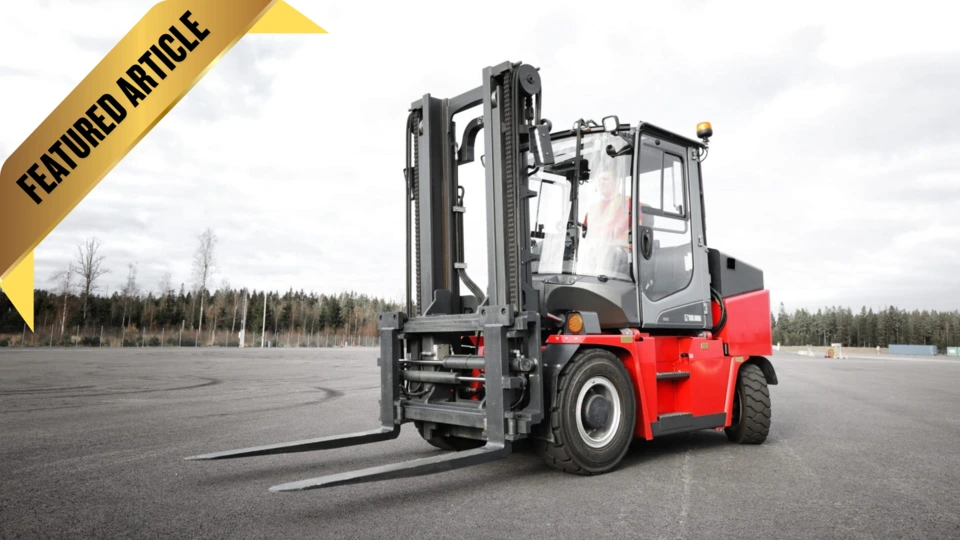
The Australian Well Control Centre (AWCC) is excited to announce the launch of its TLILIC0003 License to operate a forklift truck course, starting early October in Toowoomba. Designed for anyone required to operate a forklift as part of their workplace duties, this nationally recognised training provides participants with the skills and knowledge to safely and efficiently operate a forklift truck.

Course Highlights

Our 3-day program combines practical and theoretical learning to ensure participants gain real-world skills and confidence, including:

  • Planning and preparation for forklift operations
  • Pre-start and start-up checks
  • Safe load handling and shifting
  • Adaptation to changing workplace conditions
  • Shutdown and post-operation procedures

Students will also learn to identify hazards, assess risks, and apply effective controls in accordance with workplace health and safety legislation and codes of practice.

Who Should Enrol?

This course is ideal for:

  • Warehouse staff
  • Delivery personnel
  • Construction workers
  • Farm hands
  • Operators looking to renew their High Risk Work Licence

Participants must be 18 years or older and provide three forms of ID prior to assessment.

What You’ll Receive

Successful participants will be issued with:

  • A Statement of Attainment for TLILIC0003 – Licence to Operate a Forklift Truck

  • A Candidate Assessment Summary (CAS) to apply for their High Risk Work Licence with Workplace Health and Safety Queensland

Flexible Learning Options

AWCC offers two delivery options to suit individual needs:

  1. 3-day face-to-face training, including knowledge, calculations, and practical assessments

  2. Logbook enrolment, allowing students to practice under supervision before completing the final assessment

Get Started This September

Our Forklift course is competitively priced at $710 AUD and is scheduled weekly, making it easy to fit into your schedule.

Take the next step in your career and gain the qualifications you need to operate a forklift safely and confidently.

Book your place today: Enrol in AWCC’s Forklift Course


Continue reading

AWCC Wins TSBE Innovation Award for Turbo Program


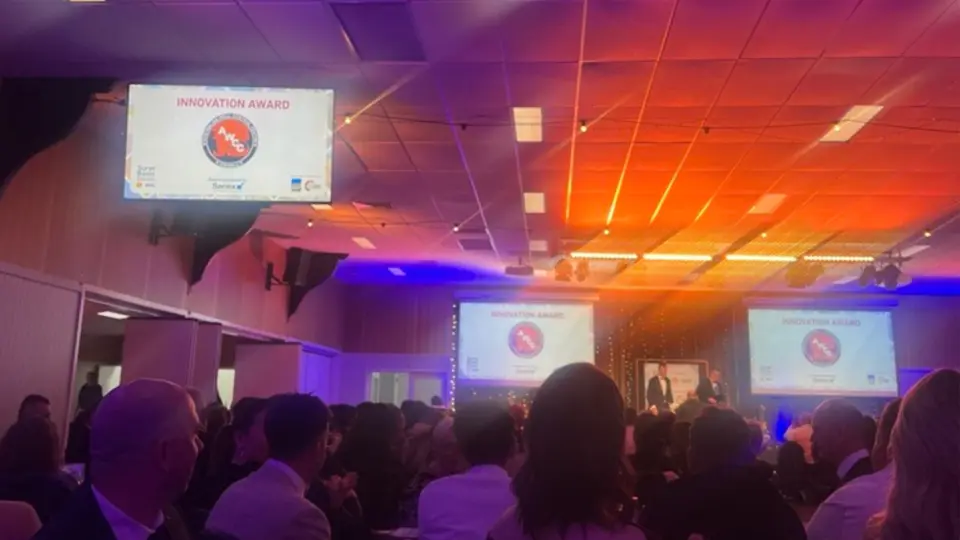
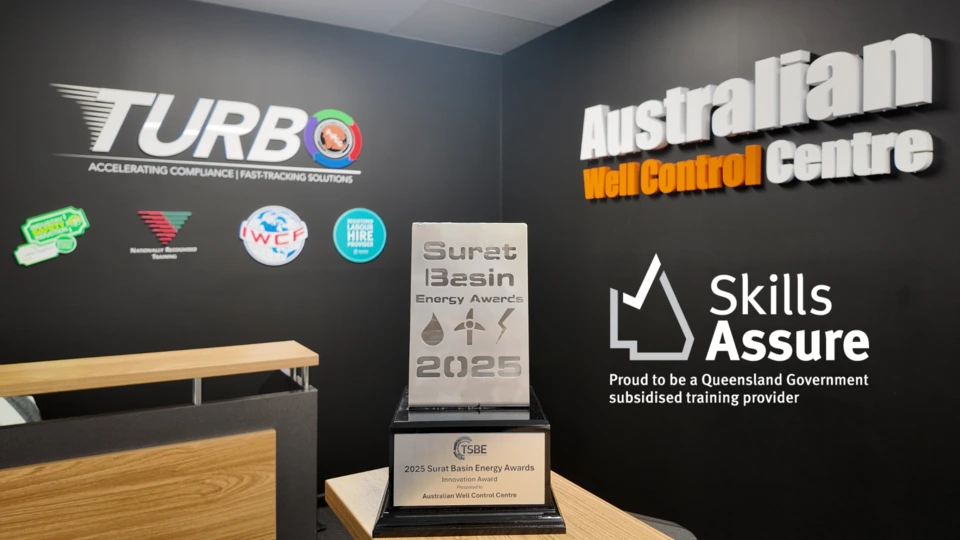
We are proud to share that the Australian Well Control Centre (AWCC) has been awarded the Innovation Award at the 2025 Surat Basin Energy Awards, hosted by Toowoomba and Surat Basin Enterprise (TSBE) in Dalby.

The Surat Basin Energy Awards celebrate the businesses and individuals who are shaping the future of Australia’s energy sector. With thriving industries across natural gas, renewables, hydrogen, and coal, the region continues to cement its reputation as Australia’s “energy capital.”

Recognised for Innovation in Training

AWCC’s Turbo Program stood out as a groundbreaking workforce training initiative designed to deliver real solutions for the oil and gas industry. The program introduces:

  • A nationally accredited qualification, giving participants a strong foundation to enter the industry.
  • Australia’s only undercover rig site training facility, providing hands-on experience in real-world conditions.
  • A streamlined approach that produces work-ready personnel while reducing onboarding times for industry employers.

Through innovation, collaboration, and a commitment to excellence, AWCC has created a sustainable pathway to address workforce shortages, enhance safety, and support the growth of Queensland’s energy industry.

A Night of Celebration

The awards evening brought together industry leaders, innovators, and changemakers to celebrate the contributions driving regional growth. AWCC was honoured to be recognised alongside outstanding finalists and winners across categories including Safety, Sustainability, Local Content, and Indigenous Commitment.

Building Safer Futures

Winning the Innovation Award reinforces AWCC’s mission to deliver training that not only meets industry standards but also sets new benchmarks in safety, efficiency, and workforce readiness.

We thank TSBE, Shell QGC, and the Western Downs Regional Council for hosting such a prestigious event, and we congratulate all award winners and finalists for their contribution to the sector.

👉 Interested in learning more about the Turbo Program?
Visit our Turbo Program Course Page to discover how you can take the next step into a career in the energy industry.


Continue reading

Origins of Turbo Cert II


Meeting the Needs of Industry

In Queensland’s oil and gas sector, drilling contractors have long struggled with a costly challenge: high workforce attrition. Millions were being lost in onboarding and training, only for new recruits to leave the industry soon after. Contractors needed a better way to ensure that those entering the industry were not only skilled but also committed to long-term careers.

AWCC’s Vision for Change
The Australian Well Control Centre (AWCC) listened to the call. As a trusted leader in well control and drilling training, AWCC set out to design a solution that would directly address these issues. The result was the Turbo Cert Program – a groundbreaking initiative that has reshaped how entry-level oil and gas professionals are trained.

A Purpose-Built Training Facility

At the heart of this innovation was a bold investment: AWCC put more than $600,000 of its own funds into building a purpose-based drilling training facility in Toowoomba, Queensland. This world-class site, the only one of its type in Australia, is equipped with real-life rig equipment that allows students to gain authentic, hands-on drilling experience.
Introducing the Turbo Cert Program
The program’s official title is RII21120 Certificate II in Oil & Gas Drilling (Onshore) and Well Servicing. For the first time in Australia, this nationally recognised drilling qualification is being delivered to the public, rather than exclusively within industry. With access to experienced rig-site trainers and specialised drilling equipment, students can complete their Certificate II in Drilling more efficiently and effectively than ever before.

From Pilot to Proven Success
The first Turbo Cert pilot launched in February 2024. Over the following 18 months, more than 160 students successfully completed the program. Employers quickly recognised the value: graduates entered the workforce with greater competency, stronger commitment, and reduced training needs. This directly reduced costs for drilling contractors and improved compliance with Queensland’s Oil and Gas Inspectorate requirements

Award-Winning Innovation

In August 2025, the Turbo Cert Program was awarded the Queensland Oil and Gas Industry Innovation Award 2025. This recognition highlighted AWCC’s leadership in creating safer, more efficient, and more sustainable training pathways for the sector.

Now Backed by Government Funding
Beyond industry recognition, the Queensland Government has now approved funding for the Turbo Cert Program. Thanks to this support, students can now access the course for just a $500 AUD contribution. This makes starting a career in oil and gas drilling more affordable than ever before, opening doors for motivated individuals eager to join the industry.


AWCC: The Quiet Achievers
For AWCC, the Turbo Cert Program represents more than just a training course. It is a win-win solution that benefits the entire sector:
· For students, it provides an affordable and accessible pathway into a high-demand career, supported by world-class facilities.
· For employers, it delivers a pool of motivated, well-prepared recruits who already understand rig operations.
· For the industry, it strengthens safety, compliance, and sustainability.
By quietly driving these changes, AWCC continues to prove itself as Australia’s quiet achiever, leading the way in drilling training without fanfare, but with lasting impact.

Learn More & Apply
Ready to start your career in oil and gas drilling, or explore funding options? Find out more below:


Continue reading

Australia’s Onshore Drilling – Monthly Wrap Up


From the desk of Gary King, Manager, Australian Well Control Centre (AWCC) 

At AWCC, we pride ourselves on being more than a training centre – we are industry partners, committed to keeping our clients, colleagues, and communities informed on the trends shaping Australia’s high-risk industries. This month, the onshore drilling sector continues to show resilience and innovation, while offshore developments remind us of the scale and longevity of Australia’s oil and gas footprint. 

Onshore Activity: Steady Rigs, Strategic Growth 

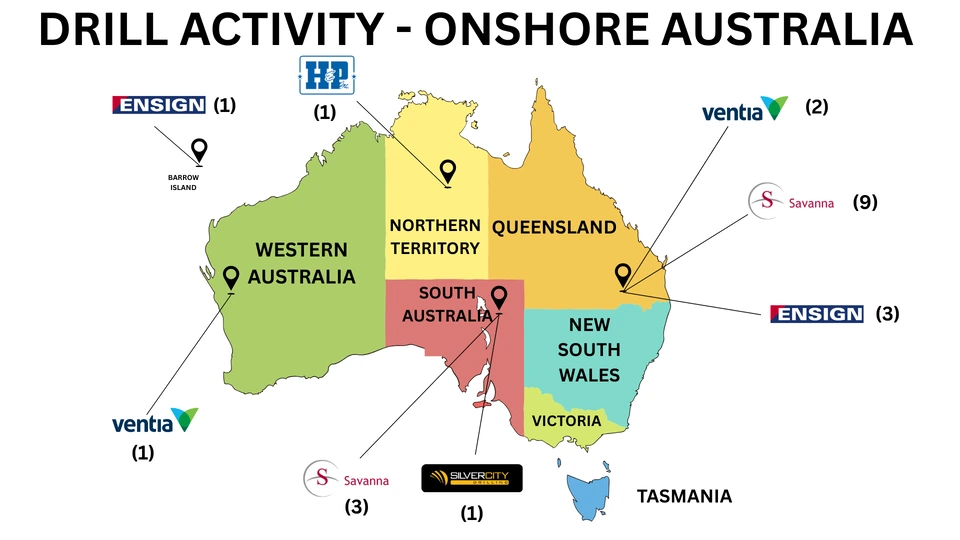
Australia recorded five active rotary rigs in August, unchanged month-on-month and up from three at the same time last year. Though modest compared to global peers, this activity is strategically significant: a single campaign in the Beetaloo or Surat Basin can shift the national tally. 

  • Beetaloo Basin (Northern Territory): Tamboran Resources’ Shenandoah South wells (SS-4H, SS-5H, SS-6H) are advancing, with batch drilling techniques showcasing modern efficiency. Early flow results from SS-2H ST1 have set basin records, underscoring the Beetaloo’s long-term potential. 
  • Queensland (Surat/Bowen): Coal seam gas remains the east-coast anchor. Programs led by Senex and supported by Ventia/Easternwell’s rigs are delivering hundreds of wells into the domestic supply chain. These projects underpin local jobs, energy security, and service-sector growth. 

Exploration spend across the June quarter rose slightly in minerals but dipped in petroleum, highlighting the competitive pull between mining and hydrocarbons for capital and labour.

Policy Backdrop: Balancing Exports and Domestic Needs 

The federal gas market review continues to dominate industry discussion, with stakeholders and state governments weighing reservation-style reforms. Queensland maintains its domestic-supply conditioned acreage awards, and Western Australia’s long-standing 15% reservation policy is still a global benchmark. 

For industry, the message is clear: drilling approvals and investment decisions are increasingly linked to domestic energy security as much as export potential. 

Offshore Milestones: Extending the Horizon 

While our focus is onshore, offshore remains critical: 

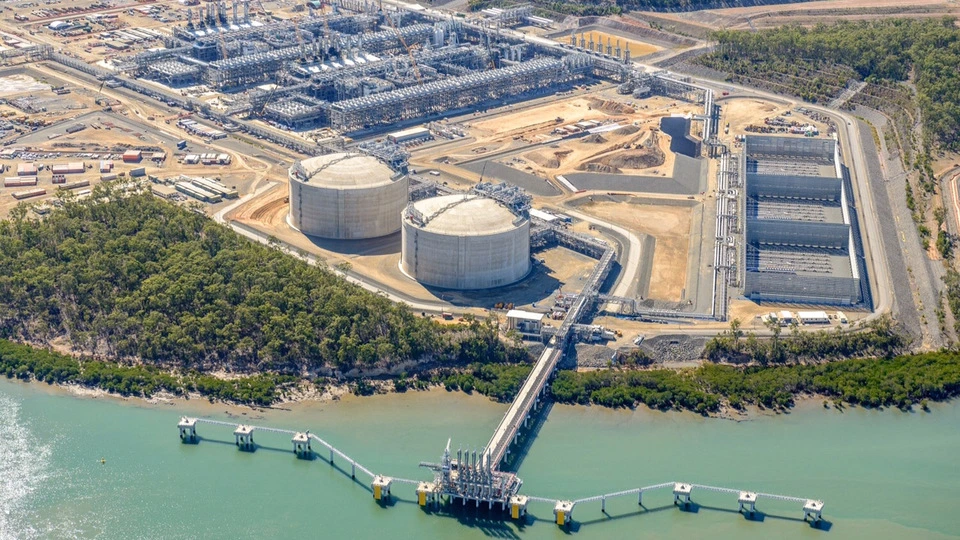
  • North West Shelf (Woodside): The Commonwealth has approved the extension of NWS LNG operations to 2070, with strict environmental conditions. 
  • Scarborough / Pluto Train 2: Construction is on schedule, with first LNG expected in 2026. 
  • Barossa / Darwin LNG: First gas is imminent, offering a vital restart for NT processing. 

These projects will shape demand for Australian labour, services, and compliance frameworks for decades. 

Industry Bench Strength 

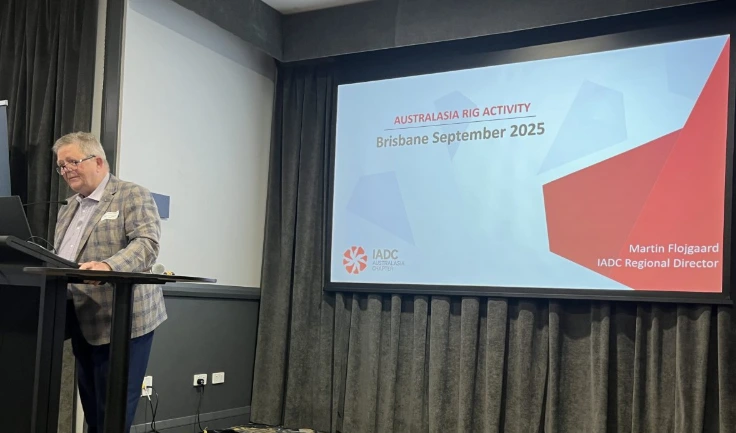
At the operational level, the International Association of Drilling Contractors (IADC) Australasia Chapter continues to champion HSE leadership across drilling contractors, both land and offshore. Associations and technical forums remain essential in aligning industry best practice with regulatory expectations. 

For us at AWCC, this reinforces our purpose: to train, develop, and certify a workforce capable of meeting these exacting standards. 

What It Means for AWCC and Our Partners 

  • Training Demand: With steady land rigs and upcoming multi-well programs, certified drill crews, safety officers, and support staff remain in high demand. 
  • Innovation: Offshore megaprojects and onshore CSG campaigns are increasingly reliant on digitalisation, remote ops, and VR/AR simulation — all areas where AWCC is investing heavily. 
  • Energy Transition: Alongside hydrocarbons, Australia is scaling up solar, wind, hydrogen, and battery storage, demonstrating that the workforce must be agile across both traditional and emerging energy systems. 

Closing 

The onshore drilling sector may not generate daily headlines, but its steady performance underpins Australia’s broader energy picture. At AWCC, we remain committed to supporting this industry with world-class training, compliance assurance, and workforce development. 

Together with our partners — from operators and contractors to regulators and communities — we will continue to strengthen Australia’s role as a safe, innovative, and responsible energy producer. 

Gary King 
Manager, Australian Well Control Centre (AWCC) 


Continue reading

Energy Security, Approvals and Workforce: Why It Matters Now


The national conversation on energy security and gas supply intensified over the past 24 hours at the Energy Nation Forum in Sydney. Leaders from New South Wales and South Australia both underscored the importance of new domestic gas supply, with projects like Narrabri being described as “incredibly important” to keep the lights on, stabilise the grid, and support manufacturing as renewables and transmission expand. 

Approvals, Delays, and Policy Uncertainty

These interventions add weight to what industry and investors have been saying for years: Australia cannot afford endless delays in approvals and policy uncertainty. The Commonwealth’s review of the east coast gas market is now at a critical point, with changes being considered to the Gas Market Code and the Australian Domestic Gas Security Mechanism. The central challenge remains the same — balancing domestic affordability with export reliability, while avoiding sovereign risk that could undermine billions already invested in Queensland LNG infrastructure.

The Debate on Export Obligations

Fresh commentary has again highlighted tension around export obligations, with debate over whether all projects should carry equal responsibility for ensuring domestic supply. Some argue tougher reservation rules are needed to avoid shortages and price shocks; others warn that blanket intervention risks damaging Australia’s reputation as a dependable supplier to Asia.

Why Workforce Matters in Energy Policy

At AWCC, we see this as more than a policy debate. These decisions have real consequences for the workforce and the communities we serve. Every project, reform, and market shift requires people who are trained, compliant, and capable of delivering safely and efficiently. That’s where our award-winning “Turbo” program comes in — a fast-tracked, industry-designed pathway that equips new entrants with the essential skills and compliance to be work-ready in just seven days. Turbo has already helped industry reduce downtime, improve safety, and expand workforce capability from day one.

Striking the Right Balance

Australia does not have to choose between the domestic market and exports — both are vital for a strong economy. By supporting investment confidence, fixing approval bottlenecks, and building workforce capability through initiatives like Turbo, Australia can achieve balance: affordable domestic supply, strong export performance, and a trusted reputation on the world stage.


Continue reading

AWCC at Sunshine Coast Contract Connector


This week, we had the privilege of attending an industry event alongside almost 100 fellow members of our region’s business community. It was a valuable opportunity to connect, learn, and reflect on how principles that drive success in one sector can be translated into meaningful outcomes for another — particularly for us at AWCC.

Lessons in Growth – From 40 to 1,150 Strong 

We heard from Brad Moses, General Manager – Pre-Contracts at Shadforth Civil, who shared the remarkable journey of his company. From a small team of just 40 people in 2003 to more than 1,150 today, Shadforth’s story is a clear example of what’s possible when collaboration, culture, and innovation are placed at the centre of business growth. 

Brad emphasised how success is built on strong relationships, early engagement with stakeholders, and a hands-on approach. It’s a formula that aligns closely with our own philosophy at AWCC: investing in people, building trust, and ensuring our solutions are not just compliant, but industry-led and sustainable. 

The Sunshine Coast Future – Infrastructure with Purpose 

We also heard from Chris Sturgess, Manager Project Delivery at Sunshine Coast Council, who gave an exciting update on the projects reshaping the region. These include: 

  • Sunshine Coast Stadium Redevelopment – unlocking capacity and opportunity for both elite and community sport. 
  • Maroochydore City Centre Precinct – a world-class development driving business, lifestyle, and cultural growth. 
  • Major Rail Upgrade – connecting people, communities, and industries, while reducing pressure on existing infrastructure. 

All these projects are designed with the 2032 Olympic Games in mind, ensuring that the region not only delivers on a global stage but also leaves a long-term legacy of accessibility, economic resilience, and community benefit. 

Why It Matters to AWCC 

For us at AWCC, events like these are more than networking opportunities — they’re reminders that industries move forward when people work together with clarity of purpose. Whether it’s civil construction, local government, or high-risk training in oil and gas, the message is the same: collaboration and innovation are what drive sustainable growth. 

As a training organisation that bridges public access, industry compliance, and employer outcomes, AWCC continues to position itself as a conduit between talent and opportunity — helping ensure Australia’s critical industries remain strong, safe, and future-ready. 


Continue reading